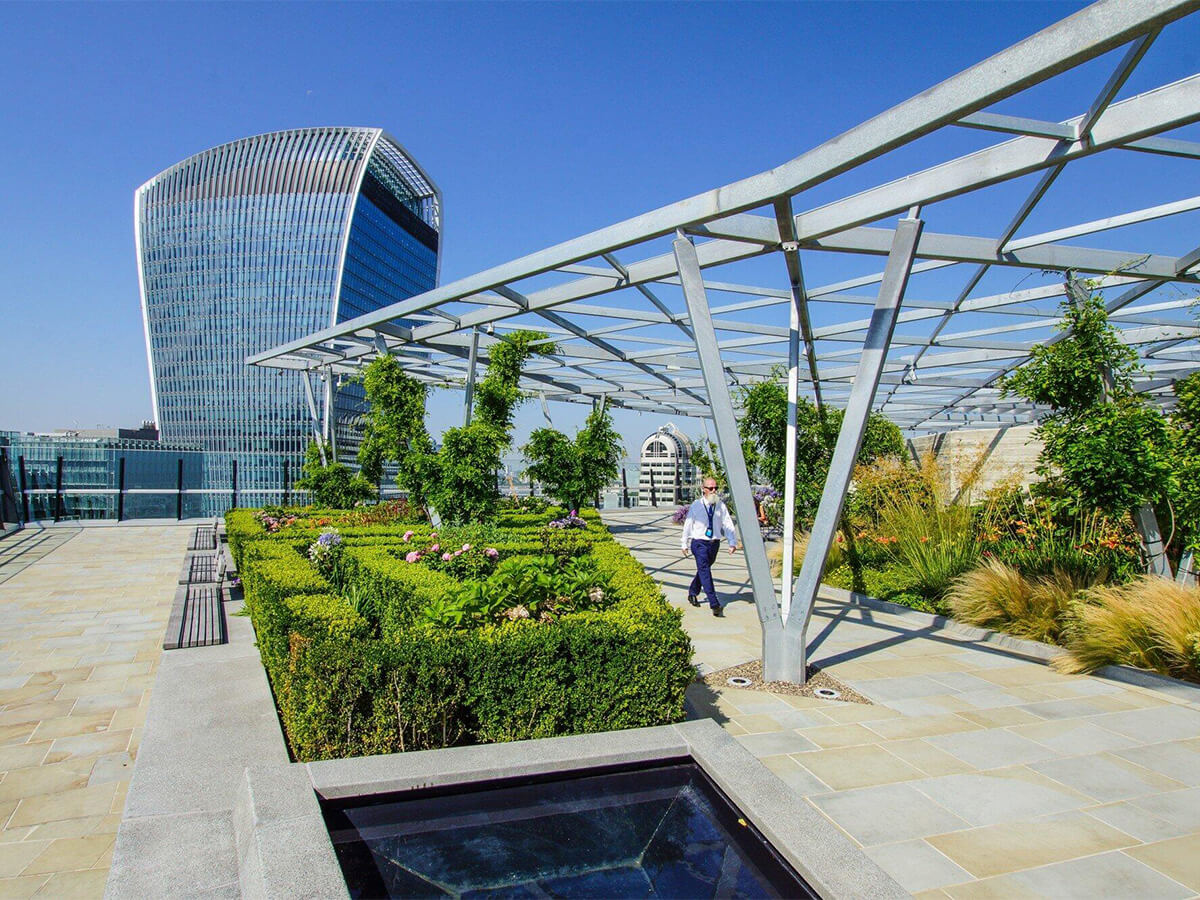
Effective commercial landscape design ideas include strong entryway landscaping and lawn layouts that guide movement. Beyond first impressions, great designs also feature brick pavers, outdoor break areas, and native, low-maintenance plantings that support daily use. To tie everything together, planning for proper drainage and maintenance keeps the entire property polished year-round.
What does your landscape say about your business before anyone walks through the door? Thoughtful outdoor spaces aligned with brand and function attract attention, build trust, and support daily operations.
A successful landscape brings design, function, and maintenance into one cohesive plan. When those elements work together, the result is a property that looks intentional and performs reliably over time.
What Does Commercial Landscaping Mean?
Commercial landscaping covers the planning and care of outdoor spaces around offices and retail properties. It blends layout with plant choice so the landscape supports daily use and brand image.
Strong results start with assessing the site and matching design decisions to soil and water movement across the area. A skilled landscaping company applies this approach at scale and keeps the property consistent as seasons change year after year.
What Are the Basics of Landscape Design?
Landscape design starts with a clear purpose for how a space will be used on working properties. Paths and planting areas should follow natural movement across the site and reduce confusion.
In commercial landscape design, layout matters, but so does how the site holds up under real use. Design choices must account for climate stress and foot traffic so the landscape stays functional and presentable as conditions change year after year.
What Is the Average Price for Landscape Design?
The cost of landscape design depends on several factors that influence both the complexity and scope of the project. When looking for corporate landscape solutions, you’ll find that pricing varies based on:
- Size of the property
- Scope of design
- Material quality and choice
- Site condition and preparation
- Project location
- Long-term care or maintenance needs
Understanding these factors will help you determine how much you should budget for quality landscape design services.
Landscape Design Ideas for Commercial Spaces
Landscape design choices shape how businesses are experienced from the outside and how properties function each day. The following ideas focus on improving outdoor commercial spaces through layout, materials, and long-term performance:
Create a Strong First Impression With Entryway Landscaping
Entryways shape how people feel about a place before they step inside. With business exterior landscaping, the goal is to guide attention toward the door while keeping movement clear and comfortable.
Strong entryway design comes from a few visible choices that work together, including:
- A visible path that aligns with the doorway
- Planting that frames the signage without blocking it
- Materials that match the building finish
- Spacing that avoids crowding near doors
Design Outdoor Break Areas for Employees and Visitors
Outdoor break areas work best when they feel separate from traffic and noise, yet remain easy to reach during short breaks. In commercial landscape design, outdoor break areas must also handle daily use without losing comfort or structure.
Good results depend on getting a few fundamentals right, including:
- Shade placement that blocks heat during peak hours
- Seating orientation that feels relaxed and usable
- Durable surface choice
Add Brick Pavers for Functional and Visual Appeal
Professional landscaping ideas often rely on brick pavers to guide movement and highlight key features on a property. They can help:
- Outline walkways
- Frame garden beds
- Mark transitions between open lawns and seating areas
For a successful outcome, focus on color and pattern placement that matches the building’s tone. Skilled brick paver installers align each section so the layout feels intentional and ties into the surrounding space.
Shape Lawns to Guide Movement and Frame the Property
In residential landscaping, shaped lawns control how people move through a space and how the property feels from different angles. Curves soften large areas, while straight lines emphasize structure and balance.
Useful shaping ideas include:
- Angling edges to lead toward entries
- Breaking up wide lawns with planting pockets
- Using height changes to mark zones
- Blending turf lines with walkways for flow
Incorporate Native and Low-Maintenance Planting Zones
Native plants create zones that work with local soil and weather instead of against them. They help the land retain moisture and reduce the need for trimming or replacement throughout the year.
Strong commercial lawn care builds around these low-maintenance zones to save time and cost. Once roots take hold, the landscape stays greener and healthier with less outside help.
Plan for Water Flow and Drainage From the Start
Water moves through every site and changes how the ground behaves over time. Early planning stops pooling, erosion, and surface damage that shorten the life of a landscape.
Effective drainage services focus on how water leaves and where it collects. Good results come from:
- Grading that directs flow away from buildings
- Catch basins at low points
- Permeable materials that let rain soak back into the ground
Maintain a Polished Look With Consistent Lawn Care
A clean, even lawn signals care before any sign or doorway does. Regular commercial lawn mowing keeps grass at a steady height and stops weeds from spreading into paved areas.
To keep that polished look, focus on the small routines that make the difference, including:
- Mow when the soil is firm and dry
- Keep blades sharp for clean cuts
- Trim borders to keep edges defined
Why Commercial Landscape Design Matters for Brand Perception
Landscaping shapes how people see a business before they ever speak to staff. A site that looks organized and well built tells visitors that the company values order and care.
Good landscape construction supports that image by blending design with function. Essential elements to get right include:
- Consistent materials and textures
- Focal points that draw attention to the entrance
- Proper grading that avoids water buildup
How Professional Landscaping Improves Property Value and Longevity
Professional landscaping strengthens a property’s structure and market appeal over time. Quality soil care, plant selection, and irrigation planning protect the land from wear while maintaining stable growth. Reliable mulch installation services add a layer that locks in moisture, limits weed spread, and gives the property a clean finish that supports both value and longevity.
Frequently Asked Questions
What Is the Rule of Three in Landscaping?
The rule of three in landscaping means arranging plants or features in odd-numbered groups so the layout feels balanced and natural. It’s a design principle that helps spaces flow visually and avoids the rigid look that comes from perfect symmetry.
The idea works best when repeated in simple visual clusters, such as:
- Three plants of similar size or tone
- Three lights placed evenly along a path
- Three stones or accents that frame a focal point
What Questions Should I Ask a Landscape Designer?
When meeting a landscape designer, focus on questions that reveal how they plan, build, and manage projects. You want to understand their process and how well they match your goals for the property.
Useful questions to ask include:
- What experience do you have with similar sites?
- How do you handle budgets and material changes?
- What maintenance will the design need after completion?
- Can you show examples of past work that reflect my vision?
The answers help you choose someone reliable and aligned with your needs.
What Is the Hardest Part of Landscaping?
The hardest part of landscaping is managing how living elements respond to time, weather, and use. Plants, soil, and water rarely behave the same way across seasons, so keeping balance takes steady attention and planning.
Another challenge comes from blending structure with growth. Hard surfaces must stay stable while roots expand, meaning every design has to predict change and leave space for it to happen naturally.
How Do You Make a Landscape Look Professional?
A landscape looks professional when every element feels intentional and well cared for. Clean lines, balanced spacing, and consistent maintenance show planning and attention to detail.
You can reach that level of finish by focusing on the following:
- Edge garden beds and paths for clear borders
- Match the plant scale to nearby structures
- Keep mulch fresh and level
- Trim overgrowth before it crowds walkways
Together, these habits create a space that looks designed, not accidental.
What Is the Best Lawn Care Routine?
A good lawn care routine keeps grass dense, healthy, and even through every season. It follows a steady pattern that protects the soil and limits weed spread.
An effective schedule often includes:
- Mowing at the proper height for your grass type
- Watering deeply instead of often
- Feeding with balanced nutrients during peak growth
- Aerating compacted soil to improve root access
Turn Commercial Landscape Design Into a Brand Asset
Strong commercial landscape design blends planning, structure, and maintenance into one system that improves how a property looks and performs. From shaped lawns to native planting zones and drainage planning, every decision builds curb appeal while protecting long-term function.
At Arbeen Landscaping, we proudly use Unilock brick paver products to create beautiful and functional outdoor spaces. Our recognition as a top hardscape contractor shows our commitment to quality. Contact us to transform your business grounds into a space that attracts clients and stands the test of time.