Mulching is a simple yet transformative gardening practice. Whether enhancing your home garden or maintaining a commercial property, understanding when to mulch can significantly affect plant health and landscape aesthetics.
Proper mulching saves time, protects soil, and promotes lush growth throughout the year. However, knowing the best time to mulch and mastering the seasonal mulching guide is critical for achieving these results.
In this guide, we’ll break down mulching tips for gardeners, explore the mulching benefits for plants, and provide actionable advice for every season. Read on to learn how Arbeen Landscaping, an industry leader in landscaping and mulch services, can help you achieve stunning results.
Why Timing Matters in Mulching
Timing isn’t just important; it’s everything. Applying mulch at the wrong time or using improper techniques can hinder plant growth and waste resources. When you understand when to mulch during the year, you create optimal conditions for your garden or landscape.
Mulching at the right time does the following:
- Shields roots from extreme temperatures
- Prevents weeds from taking over
- Conserves moisture during dry spells
- Protects soil from erosion
With these benefits, mulching becomes critical in any gardening or landscaping maintenance plan.
Spring Mulching: Preparing for New Growth
Spring is the best time to mulch for gardens emerging from winter dormancy. The soil begins to warm, and plants require the perfect balance of:
- Nutrients
- Moisture
- Weed control
When to Mulch in Spring
Late March to early April is ideal. Mulch too early, and the soil remains cold, slowing root growth. Mulch too late, and weeds may have already taken hold.
Benefits of Spring mulching:
- Moisture retention: Spring rains are preserved in the soil, reducing the need for frequent watering
- Weed prevention: A 2-3 inch layer blocks sunlight, stopping weed germination
- Soil fertility: Organic mulches like compost and shredded bark decompose, adding nutrients to the soil
Spring mulching tips:
- Clear old mulch: Remove any mulch from the previous season to avoid mold and pests
- Prep the soil: Loosen the topsoil to improve water and nutrient absorption
- Don’t over-mulch: Excessive mulch can smother roots and harbor pests
Summer Mulching: Protecting Against Heat
Summer is a challenging time for plants. High temperatures and dry conditions can stress roots and deplete soil moisture. Summer mulching acts as a protective shield, ensuring plants thrive even in the hottest months.
When to Mulch in Summer
Apply or refresh mulch in early summer, around late May or early June. Do this before temperatures peak.
Benefits of Summer mulching:
- Temperature regulation: Mulch insulates soil, keeping it cool during heatwaves
- Moisture conservation: Reduces evaporation, preserving water for plant roots
- Improved aesthetics: Fresh mulch brightens landscapes, especially in commercial spaces
Summer mulching tips:
- Use light-colored mulch: Materials like straw or pine needles reflect sunlight and prevent overheating
- Focus on flower beds and shrubs: These areas benefit most from temperature regulation and moisture retention
- Monitor decomposition: Organic mulches may break down faster in the summer heat, so reapply as needed
Fall Mulching: Preparing for Winter
Fall mulching is often overlooked but is one of the most critical steps in the seasonal mulching guide. It prepares soil and plants for winter, protecting roots from freezing temperatures and heavy rains.
When to Mulch in Fall
Apply mulch in late October or early November, before the first frost. The goal is to insulate the soil without trapping excess moisture.
Benefits of Fall mulching:
- Winter insulation: Mulch acts as a blanket, keeping roots warm and reducing frost damage
- Erosion prevention: Heavy autumn rains can wash away topsoil, but mulch anchors it in place
- Weed control: Late-season weeds are smothered before they can spread
Fall mulching tips:
- Use a thick layer: Apply 3-4 inches for maximum insulation
- Choose organic mulch: Materials like shredded leaves or wood chips decompose slowly, providing nutrients into spring
- Avoid mulching too early: Wait until temperatures drop consistently to prevent trapping heat-loving pests
Fall mulching is especially beneficial for perennials and shrubs. Arbeen Landscaping ensures precise application to protect plants and maintain a neat appearance.
Winter Mulching: Safeguarding Dormant Plants
Winter is the harshest season for plants, particularly in northern climates. Winter mulching provides vital protection for dormant plants and soil.
When to Mulch in Winter
Apply mulch in late November or early December after the ground freezes. This minimizes frost heaving, which occurs when soil expands and contracts.
Benefits of Winter Mulching:
- Root protection: Maintains stable soil temperatures, preventing freeze-thaw cycles that can damage roots
- Moisture preservation: Mulch reduces evaporation, keeping the soil moist during dry winter air
- Pest barrier: Certain mulches can deter pests seeking shelter
Winter mulching tips:
- Use straw or pine needles: These materials are lightweight and insulating
- Focus on Perennials and shrubs: These plants benefit most from winter mulch
- Remove mulch in Spring: As temperatures rise, remove winter mulch to prevent mold and pests
Mulching Techniques for Optimal Results
Beyond seasonal timing, proper technique is key to effective mulching. Use these professional garden mulching techniques to maximize benefits:
- Clear the area: Remove debris, weeds, and old mulch before applying a new layer
- Maintain the right depth: Apply 2-3 inches for most plants, and up to 4 inches for insulation in fall
- Avoid mulch volcanoes: Keep mulch 2-3 inches away from plant stems and tree trunks to prevent rot and disease
Choosing the Right Mulch
Selecting the right mulch is crucial for achieving the desired benefits in your garden or landscape. The type of mulch you choose should match your specific needs, whether enriching soil, maintaining aesthetics, or managing foot traffic.
Below is a detailed guide to help you make the right choice.
Organic Mulches
Organic mulches are derived from natural materials and are excellent for improving soil health over time. These materials decompose gradually, releasing essential nutrients into the soil.
Shredded Bark
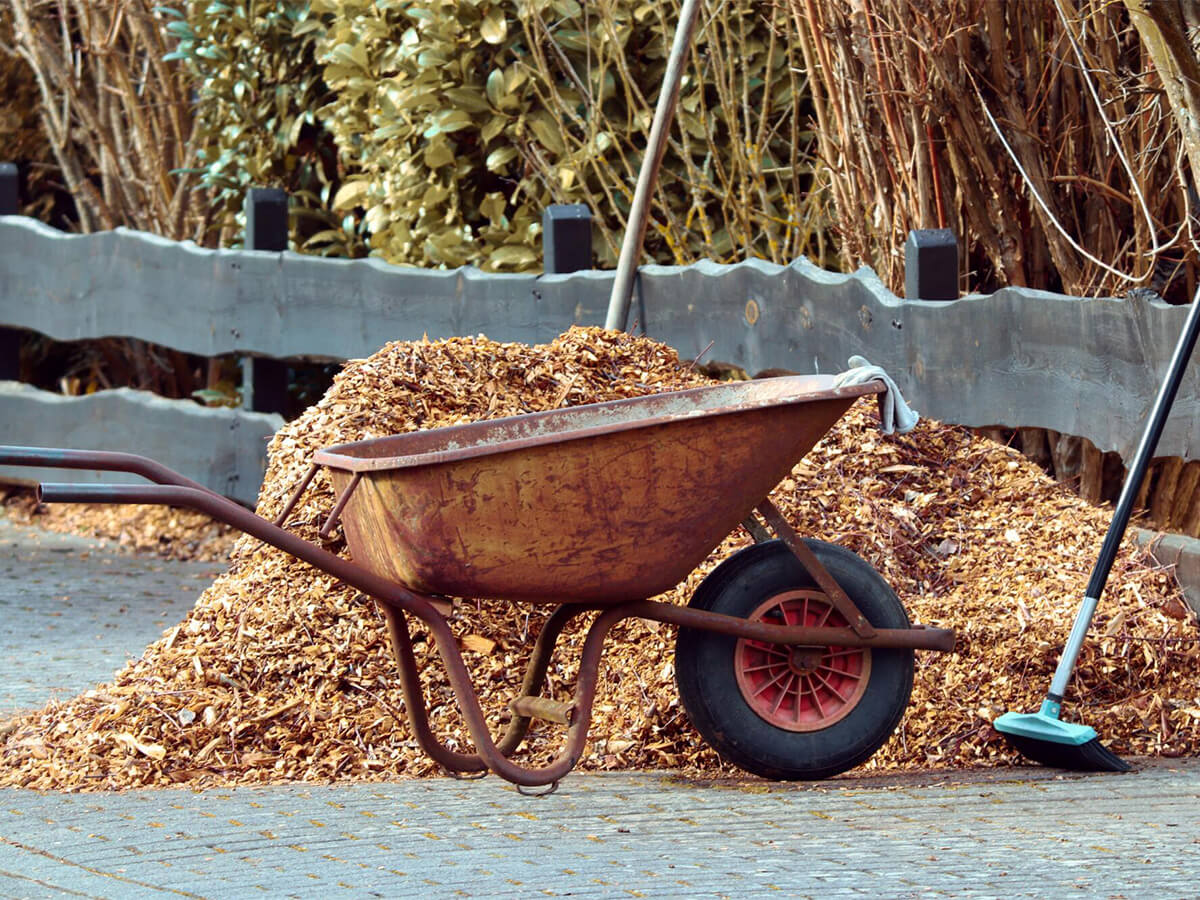
Long-lasting and visually appealing, shredded bark works well for trees, shrubs, and flower beds. It’s a popular choice for decorative landscapes and commercial properties due to its clean, professional look.
Compost
Rich in nutrients, compost is ideal for vegetable gardens and areas requiring a soil boost. It not only enhances fertility but also improves soil structure.
Straw
Lightweight and easy to spread, straw protects soil in vegetable gardens. Straw does all of the following:
- Prevents soil erosion
- Suppresses weeds
- Decomposes quickly
Organic mulches are great for areas where soil improvement is a priority. They work particularly well in gardens and flower beds, adding a natural, earthy aesthetic.
Inorganic Mulches
Inorganic mulches are made from non-biodegradable materials. They don’t break down, making them ideal for high-traffic or decorative areas where durability is essential.
Rubber Mulch
Made from recycled tires, rubber mulch is highly durable and provides excellent cushioning. It’s a great choice for playgrounds, pathways, and commercial spaces with heavy foot traffic.
Gravel and Stone
These materials are perfect for areas requiring excellent drainage, such as walkways, driveways, or rock gardens. Gravel and stone are also low-maintenance and long-lasting.
Seasonal Mulch Options
The color and material of mulch can be tailored to suit seasonal needs. Seasonal choices help optimize soil temperature and enhance your garden’s appearance.
Darker Mulches for Winter
Mulches such as shredded bark or dyed wood chips absorb sunlight, helping to retain heat in the soil. This is especially beneficial for protecting roots during cold months.
Lighter Mulches for Summer
Materials like straw or pine needles reflect sunlight, keeping the soil cool during hot weather. These mulches also help conserve moisture and reduce heat stress on plants.
If you’re unsure which type of mulch is best for your property, Arbeen Landscaping offers expert recommendations and professional installation services to maximize the benefits of mulching.
The Role of Mulch in Soil Health and Ecosystem Support
Mulching does more than enhance plant aesthetics or regulate soil temperature. It is critical in promoting overall soil health and supporting the local ecosystem. Understanding the ecological benefits of mulching can help you make more sustainable choices for your garden or landscape.
Mulch as a Soil Protector
One of the key functions of mulch is to act as a barrier that shields soil from harsh environmental elements.
Heavy rain or strong winds can erode topsoil, washing away valuable nutrients. Mulch stabilizes the soil, preventing displacement and keeping nutrients in place.
Supporting Beneficial Soil Organisms
Healthy soil teems with life, from earthworms to microscopic bacteria. These organisms play a vital role in breaking down organic material, aerating the soil, and making nutrients available to plants.
Weed Seed Suppression and Soil Balance
Mulch not only blocks sunlight but also prevents weeds. It helps maintain the natural balance of the soil.
Enhancing Biodiversity
By incorporating natural mulches into your landscape, you can support local biodiversity. Mulch can offer shelter to beneficial insects like ground beetles, which help control pest populations.
Ready to Mulch for a Thriving Landscape
Understanding when to mulch is key to achieving a vibrant, low-maintenance garden or commercial property. Proper mulching enhances plant health, improves soil quality, and boosts curb appeal in every season.
Arbeen Landscaping is an Award-Winning Authorized Unilock Contractor. We specialize in creating beautiful outdoor spaces with expert mulching techniques and premium Unilock brick paver products.
Contact Arbeen Landscaping today to schedule professional mulching, landscaping, or drainage services. With our proven expertise in residential and commercial landscapes, let us transform your property into a lush, thriving masterpiece.